
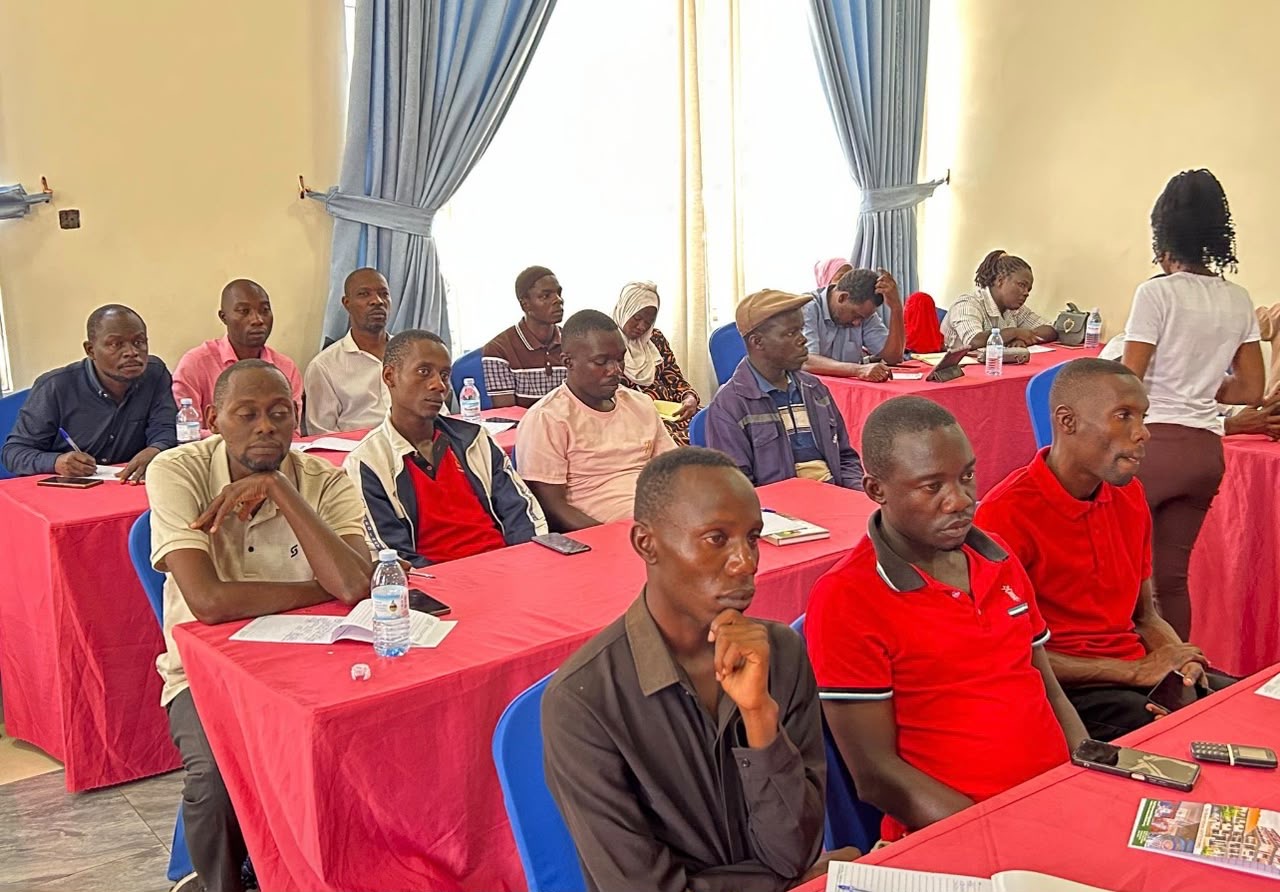
A section of private business owners in the Bunyoro sub-region has raised concerns over what they describe as limited access to government financing programmes, including the Small Business Fund (SBF), Agricultural Credit Facility (ACF), GROW Project, and Emyooga, despite the initiatives being established to support small businesses and agricultural enterprises.
The concerns were raised during the Regional Post-National Budget Dialogue organised by the Private Sector Foundation Uganda (PSFU) in Hoima City. The engagement sought to highlight opportunities available under the 2026/27 National Budget and discuss how small businesses can benefit from government interventions.
Among the financing programmes discussed were the Agricultural Credit Facility (ACF), the Small Business Fund (SBF), the GROW Project, and Emyooga, all of which are intended to improve access to affordable financing for entrepreneurs and farmers.
However, participants said accessing the funds remains a major challenge due to bureaucracy, stringent requirements, and lengthy approval processes.
They argued that despite the government’s continued allocation of funds to support entrepreneurship, many genuine beneficiaries have been unable to access the facilities.
Joviah Kunihira, Executive Director of Hoima Tailors Emyooga SACCO and a leader of the Uganda Small Scale Industries Association (USSIA) in Bunyoro, said complicated application procedures, particularly through commercial banks, continue to lock out many deserving entrepreneurs.
She revealed that her SACCO applied for GROW Project funding nearly three years ago but has never received any response despite fulfilling all the requirements.
“It is now about three years since we applied for GROW Project funds, but we have not received any money. We submitted every requirement to UDB, but still nothing has been done,” Kunihira said.
She noted that many business owners are increasingly losing confidence in government programmes because they rarely benefit from the promised financial support.
Another participant, who preferred anonymity, alleged that although the government introduces programmes aimed at empowering low-income earners, the funds often fail to reach the intended beneficiaries.
Ashif Ahmed, another participant, called for extensive grassroots sensitisation before rolling out government financing programmes.
According to him, entrepreneurs also need training in financial management and taxation to improve their ability to access and effectively utilise available funding.
“Beyond providing funds, government should invest in financial literacy so that business owners understand record keeping, tax obligations, and how to manage their enterprises sustainably,” Ahmed said.
Collins Agaba from the Private Sector Foundation Uganda said the dialogue was intended to help businesses understand the opportunities available under the recently approved national budget.
He noted that PSFU has consistently engaged government to advocate for increased financing for small businesses and the agricultural sector, although many entrepreneurs continue to face challenges accessing the funds.
“PSFU remains committed to engaging government agencies, including URSB, UNBS and financial institutions, to ensure business communities can easily access government financing programmes,” Agaba said.
Yahaya Kobwemi, Executive Director of Kitara Community Seed Bank for Social Transformation (KISE), expressed concern over the increasing cost of doing business, particularly the burden of taxation.
He argued that high taxes continue to constrain the growth of private enterprises and called on PSFU to champion reforms that provide lasting relief to businesses.
“The rising cost of business operations, especially taxation, is crippling many enterprises. We need customised interventions that provide sustainable solutions to these challenges,” Kobwemi said.
Addressing the meeting, Edward Bigirwa, Head of Administered Funds at the Bank of Uganda (BoU), said government has established several financing windows, including the Agricultural Credit Facility and the Small Business Fund, to strengthen agriculture and small businesses.
He explained that the funds are channelled through commercial banks, SACCOs and other participating financial institutions.
However, Bigirwa acknowledged that many eligible entrepreneurs are still failing to benefit from the programmes.
He attributed this largely to poor business practices, including failure to formally register businesses, inadequate financial record keeping, and conducting transactions outside the formal banking system.
“These are some of the key requirements financial institutions consider when assessing loan applications,” he said.
Another Bank of Uganda official, Prossy, explained that under the Agricultural Credit Facility, businesses can access financing of up to Shs500 million at an annual interest rate of 10 percent.
She noted that large-scale enterprises are eligible for repayment periods of up to eight years, while smaller businesses are given between one and three years depending on the nature of the investment.
“For large-scale businesses such as beverage companies, we provide repayment periods of up to eight years, while smaller enterprises are given between one and three years,” she said.
She also cautioned entrepreneurs against borrowing from multiple lenders simultaneously, saying excessive indebtedness often leads to loan application rejections.
“We realise that some of you have loans from multiple sources, and that is one of the reasons why some applicants fail to qualify for Bank of Uganda-supported financing,” she said.
Prossy further urged the Private Sector Foundation Uganda to intensify financial literacy programmes, with particular emphasis on record keeping, business formalisation, and prudent financial management to improve entrepreneurs’ chances of accessing affordable government financing.
